Five Things I Learned Doing A Solo Exhibition…
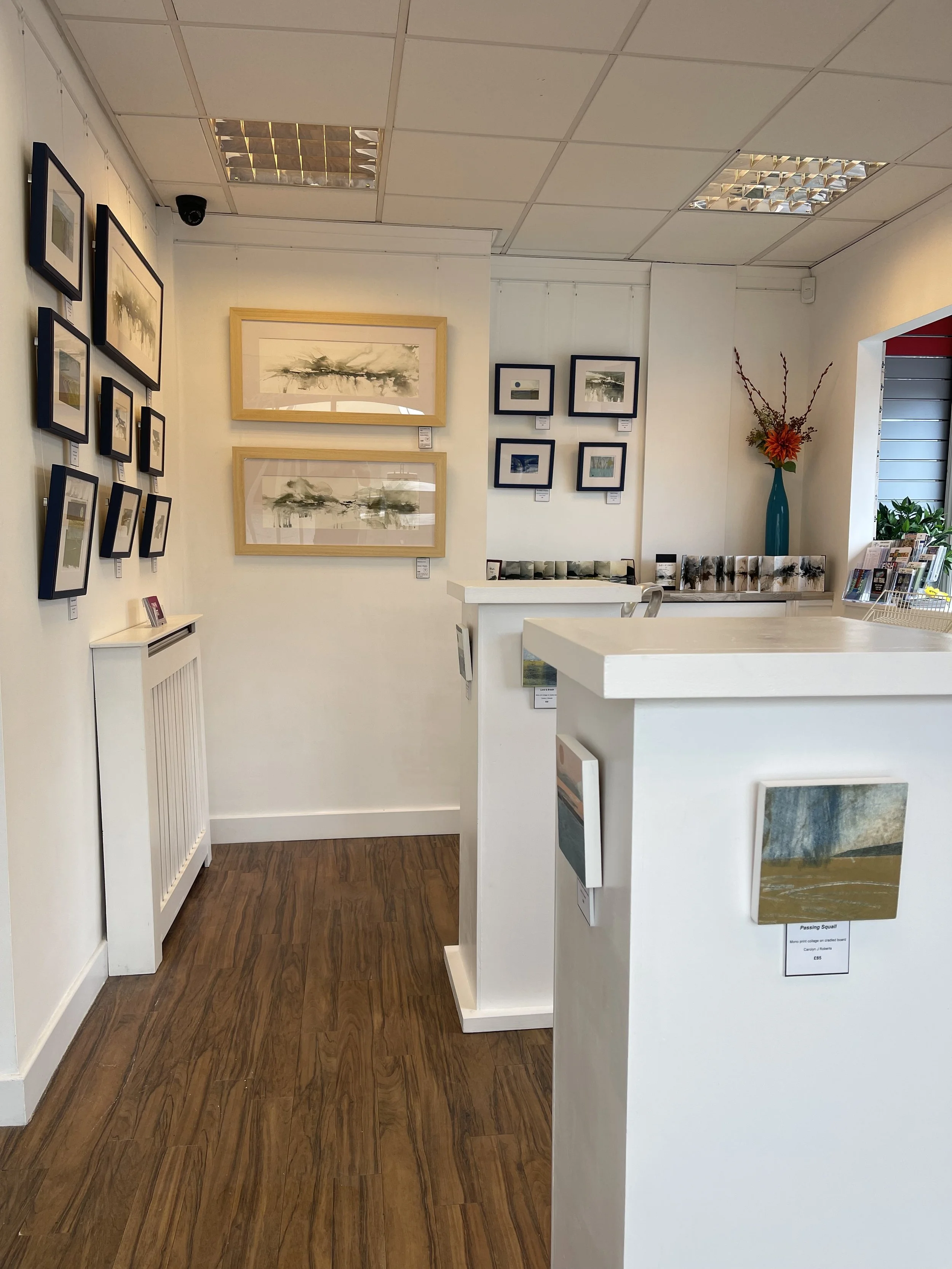
“Where Water & Wind Meet” - solo exhibition at Indigo Crow Gallery, Lincoln
(in no particular order… because by the final week my brain had largely dissolved into lists, frame corners, and coffee.)
There is something quietly magical - as well as hugely stressful - about preparing for a solo exhibition.
You spend months — sometimes years — gathering ideas, experimenting, discarding, beginning again, chasing colours that refuse to behave, and trying to coax something meaningful onto the surface of paper or board. Something that you actually like…
And then, suddenly, time has run out and the work has to leave the studio.
Not just the paintings themselves, but the whole invisible ecosystem surrounding them: framing, photographing, naming, pricing, writing, promoting, hanging, packaging, labels… and approximately seven hundred tiny decisions nobody really tells you about beforehand.
Having recently navigated this particular combination of excitement, gratitude, mild panic, and logistical spreadsheetery, I thought I'd share a few things I learned along the way.
Not necessarily in order of importance.
More in order of what floated back to the surface once the dust — and bubble wrap — settled.
1. Allow far more time than you think you need
Not just for making the work.
For finishing the work.
This was perhaps my biggest lesson.
Because painting, lovely though it is, turns out to be only one part of preparing for an exhibition.
Once the final brushstroke is down, an entirely new phase quietly arrives carrying a clipboard and a stopwatch.
Suddenly there’s:
— framing
— photographing
— editing images
— writing descriptions
— naming pieces (why does naming paintings suddenly feel impossible after months of talking to them daily?)
— pricing
— catalogue information
— labels
— artist statements
— promotional material
And somehow each task takes approximately three times longer than anticipated. Why is that?
What begins as “I’ll just quickly photograph these tomorrow…” can very rapidly become three hours of wrestling with frames and muttering about the weather being “wrong for good light.”
Allowing generous time buffers such matters.
Not because everything will go perfectly.
Because it won’t.
But because racing toward the finish line carrying twenty-seven half-completed jobs and an escalating stress level is… not ideal creative practice.
Ask me how I know.
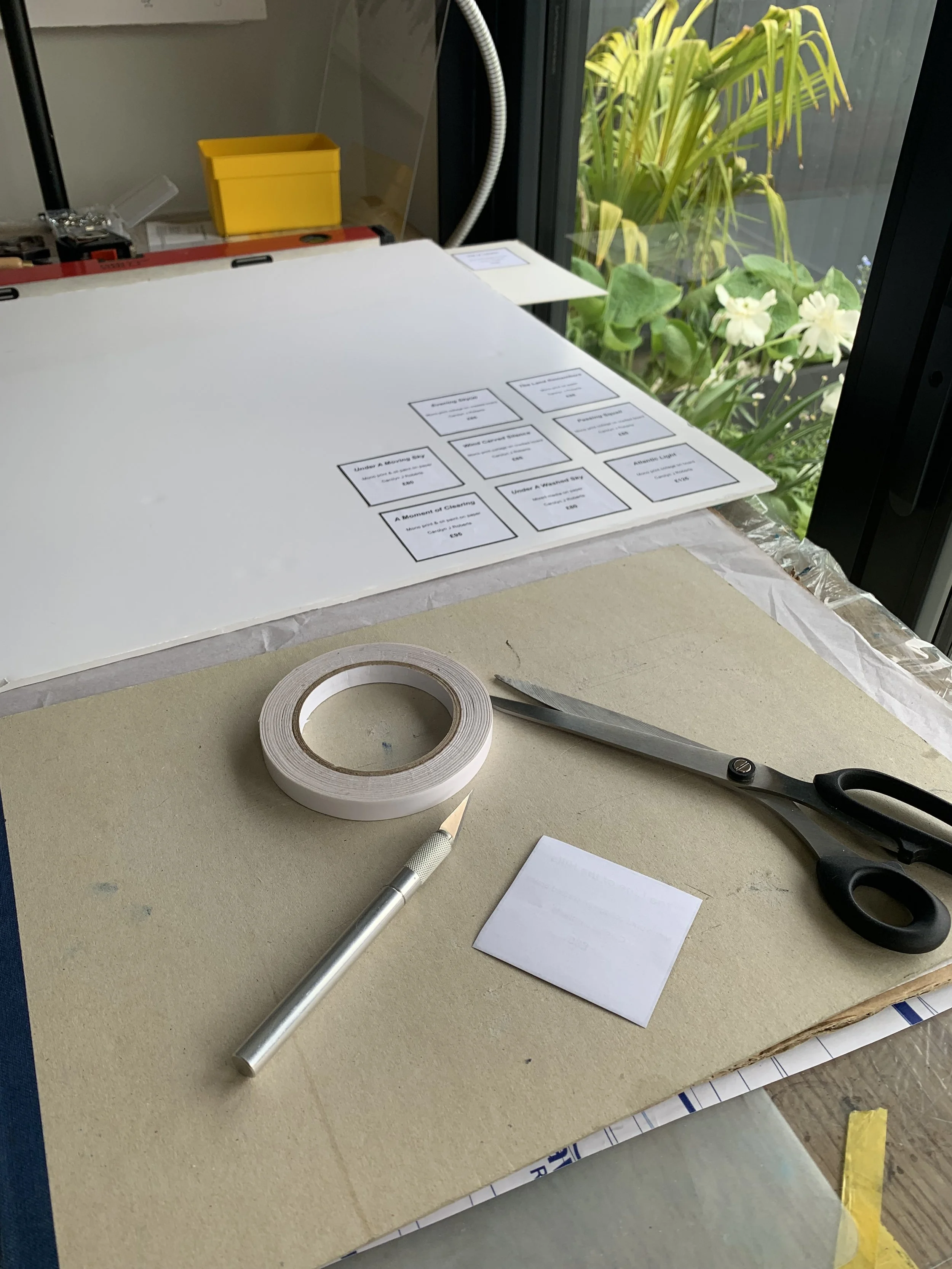
Labels, labels, labels…
2. Check gallery requirements early — even the boring practical bits
Every gallery does things slightly differently.
Hanging systems.
Fixings.
Labels.
Delivery arrangements.
Insurance….half a dozen emails and two telephone call later….
What they provide.
What they don’t provide.
This sounds terribly sensible and obvious written down.
And yet…
I discovered, slightly later than ideal, that I had made a quiet assumption about printed exhibition materials.
In my head, there was a neat little vision involving the exhibition blurb and artist bio magically appearing beside the work.
Spoiler alert: magic was not part of the service agreement.
Fortunately, this was fixable.
But it was a useful reminder that assumptions — however optimistic — are not administrative systems.
So my advice?
Ask everything.
Even the questions that feel slightly small or obvious.
Will they print your exhibition statement?
Do they provide labels?
What hanging method is required?
What exactly needs arriving ready-to-install?
Future You — the slightly sleep-deprived version sorting frames two days before delivery — will be extremely grateful.
3. Document the whole process — not just the polished ending
This one I’m still learning.
Because when you’re deep in the messy middle of making, documenting can feel like one more task competing for already limited creative bandwidth.
But honestly?
People love the story behind the work.
Not just the pristine finished painting under gallery lighting.
The experiments.
The failed colour mixes.
The piles of paper.
The sketchbooks.
The coffee cups.
The studio table looking like weather itself has passed through it.
The walks that sparked an idea.
The tests that went nowhere.
The quiet breakthroughs.
The hanging-day chaos.
All of it.
And from a practical point of view, it helps enormously with newsletters, blogs, Instagram posts, and promotion.
There were moments during this process when I was deeply grateful for photographs Past Me had bothered to take months earlier.
Past Me rarely receives praise from Present Me.
This was one of those occasions.
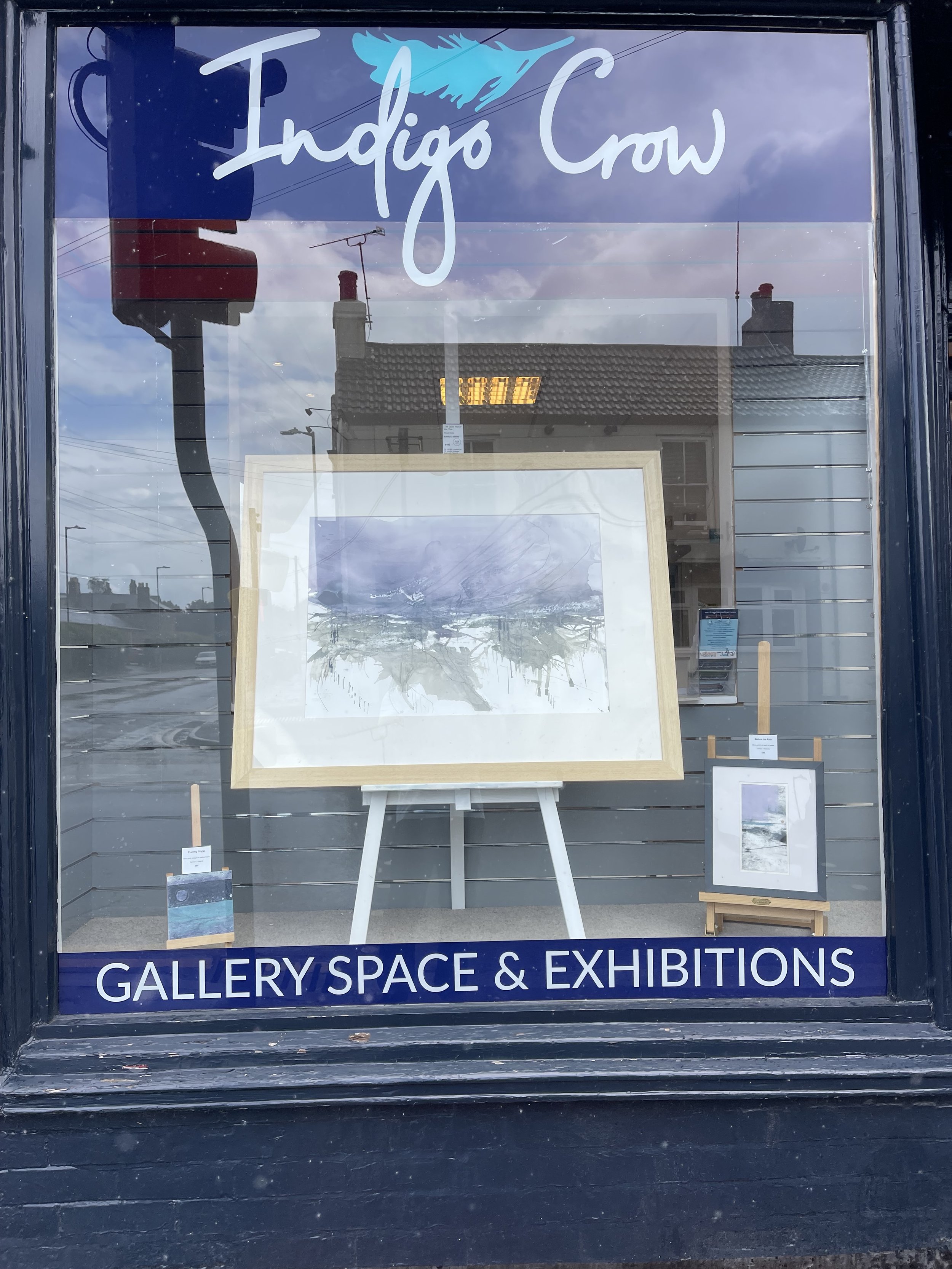
“The Quiet Pull of the Tide” proudly on show at Indigo Crow Gallery, Lincoln
4. Have a few works quietly waiting in the wings
A lovely problem to have… but a real one nonetheless.
If work sells during an exhibition, galleries often handle this in different ways.
Some collectors are very happy to leave a piece hanging until the exhibition closes.
Others — understandably, especially if they are only visiting the area — would quite like to take their painting home with them.
Which can potentially leave an unexpected gap on the wall.
Having a small reserve of additional pieces can be incredibly helpful.
Not because you expect disaster.
Simply because exhibitions are living things. They shift. They evolve.
And it’s reassuring knowing there’s a quiet Plan B tucked safely in the studio if needed.
Also, slightly selfishly, it can save you from attempting emergency creative production under deadline pressure.
Nobody needs panic painting entering the workflow.
5. Have a support system — and a way to manage the stress
A solo exhibition is a wonderful thing.
It is also… a lot.
Emotionally.
Practically.
Creatively.
Logistically.
There were moments of genuine excitement.
Moments of self-doubt.
Moments of staring blankly at a to-do list wondering why on earth I thought this seemed like an excellent idea.
And moments of unexpectedly feeling very vulnerable about sending deeply personal work out into the wider world.
Having support matters enormously.
My biggest cheerleader throughout all of this has been my OH — consistently encouraging, reassuring, helping me keep perspective, and gently reminding me to eat something other than toast when deadlines loom.
Whether it’s a partner, friend, fellow artist, family member, or studio community — having people who understand the emotional terrain can make all the difference.
And alongside support… finding ways to manage your own energy and stress levels matters too.
Walks.
Lists.
Coffee.
Chocolate…
Stepping away from the frame wire for ten minutes before saying something regrettable to an inanimate object.
Whatever helps.
Finally: remember to breathe… and enjoy it
This is the part I’m saying as much to myself as to anyone else.
Because somewhere amid the admin, pricing spreadsheets, packaging materials, and existential questions about hanging order…
there is also this:
You did it.
You made the work.
You gathered the collection together.
You brought an idea from fragile beginning to public conversation.
That deserves acknowledging.
Celebrating, even.
A solo exhibition is a big undertaking.
A vulnerable one.
A joyful one.
A slightly exhausting one.
But also a remarkable achievement.
So pause when you can.
Look around the room.
Take it in.
And remember to enjoy what you’ve created.
Even if you’re still mentally rewriting labels while doing so.
And perhaps that is part of the learning too.
Not just how to organise the labels, check the gallery paperwork, or remember to photograph the work before it leaves the studio… but how to recognise what it means to bring something fully into the world.
To allow yourself, however briefly, to stand beside what you’ve made and acknowledge the courage, mess, persistence, and care that got it there.
As David Whyte writes:
“Anything or anyone that does not bring you alive
is too small for you.”
Despite the lists, logistics, mild framing fatigue, and occasional existential wobble… there is something profoundly enlivening about gathering the work together and letting it step out into the wider conversation.
And when it’s all over, take some time to process, to appreciate, to give yourself that metaphorical ‘pat on the back’ - before the process starts all over again….