On Capacity, Energy, and the One That Got Away
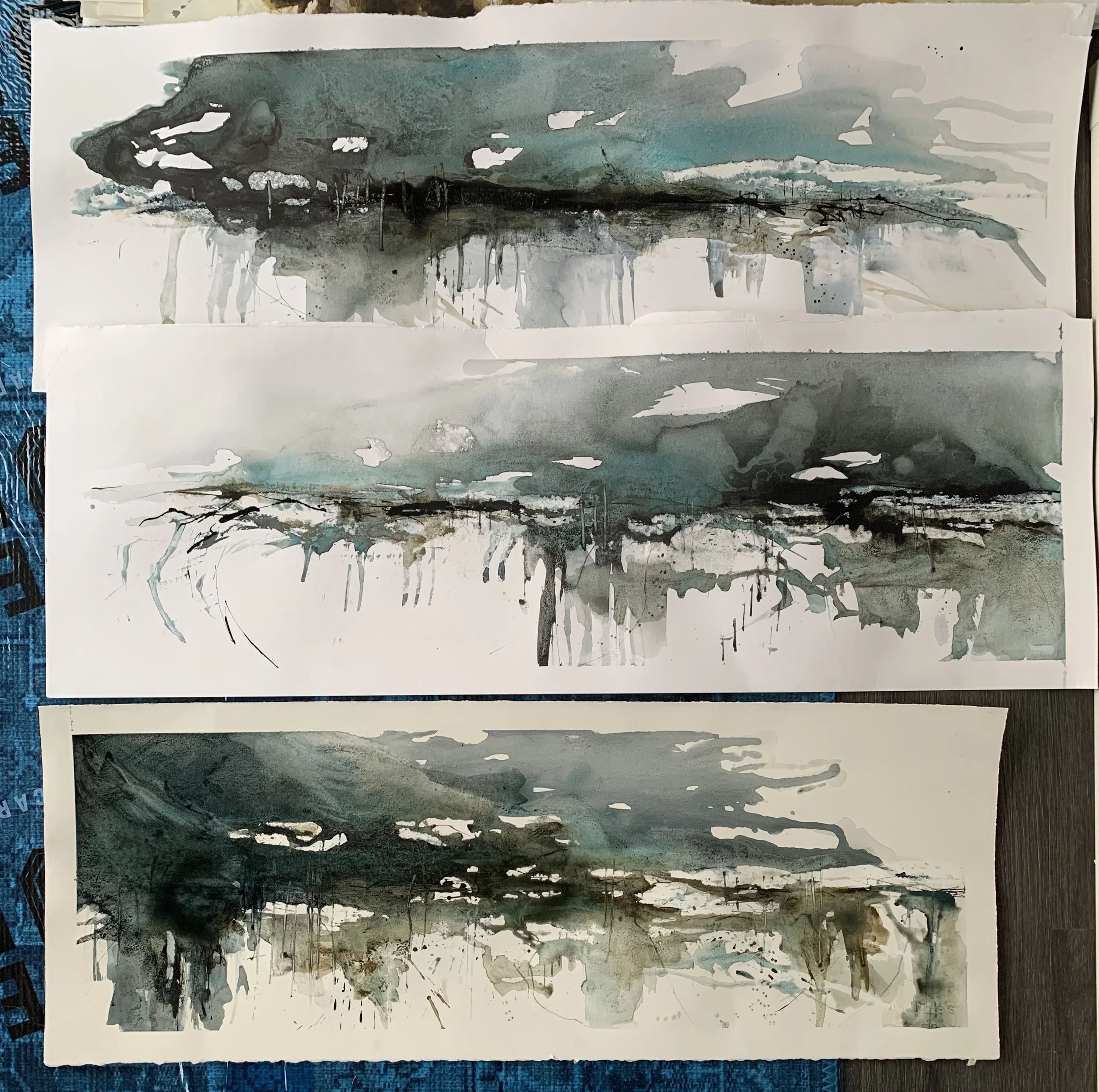
Top two felt right. The bottom one… not so much.
There’s a quiet sweet spot to working — a place where focus feels natural, energy flows, and the work starts to surprise you in good ways. I’ve learned that for me, that place usually lasts a couple of hours.
Today was a good example. I spent two focused hours painting and made a couple of pieces I really liked. They felt alive and resolved in that way that only happens when you’re properly present. And that should have been my cue to stop. Instead, I carried on — fiddling, adjusting, trying to squeeze just a bit more out of the session. The result? The last piece was the one that got away. The more I worked at it, the less it held together.
It was a familiar reminder: knowing when to stop is part of the work.
When I paint, I like to stand — using my whole arm and body rather than just my wrist. It brings more energy into the marks and a physicality I really enjoy. But after a couple of hours, my back lets me know it’s had enough. That physical limit mirrors a creative one: push past it and things start to unravel.
I used to give myself a hard time about this. I thought “real” work meant painting solidly for six or eight hours a day. When I tried, I’d be completely wiped out the next day — mentally and physically. Over time, I’ve learned that shorter, focused bursts suit me far better.
That doesn’t mean the work stops when the brush is down. There’s thinking, planning, admin, reflecting — all of it part of the same ecosystem. Knowing my capacity hasn’t made me less productive; it’s made the work more sustainable.
And often, better.