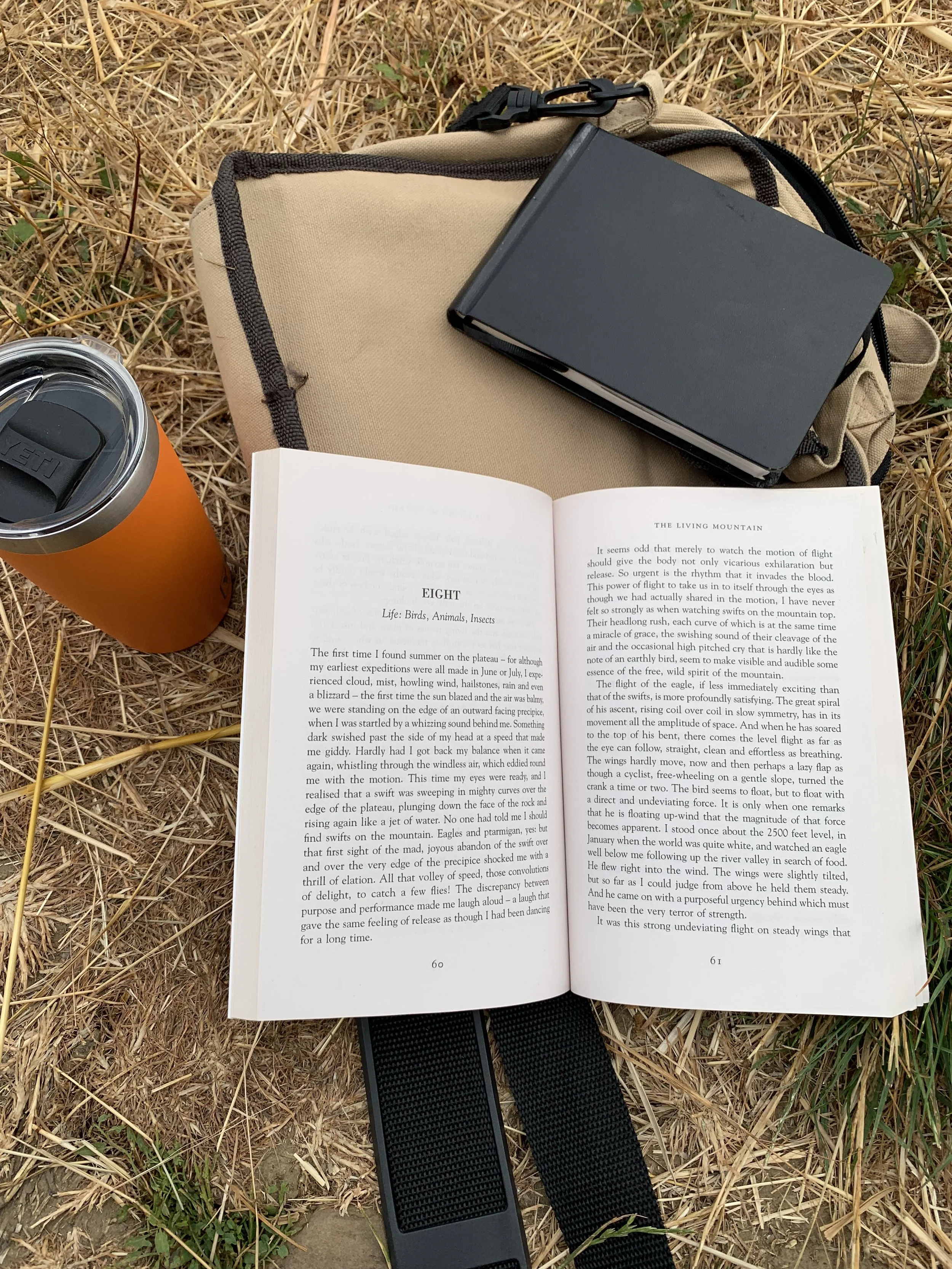
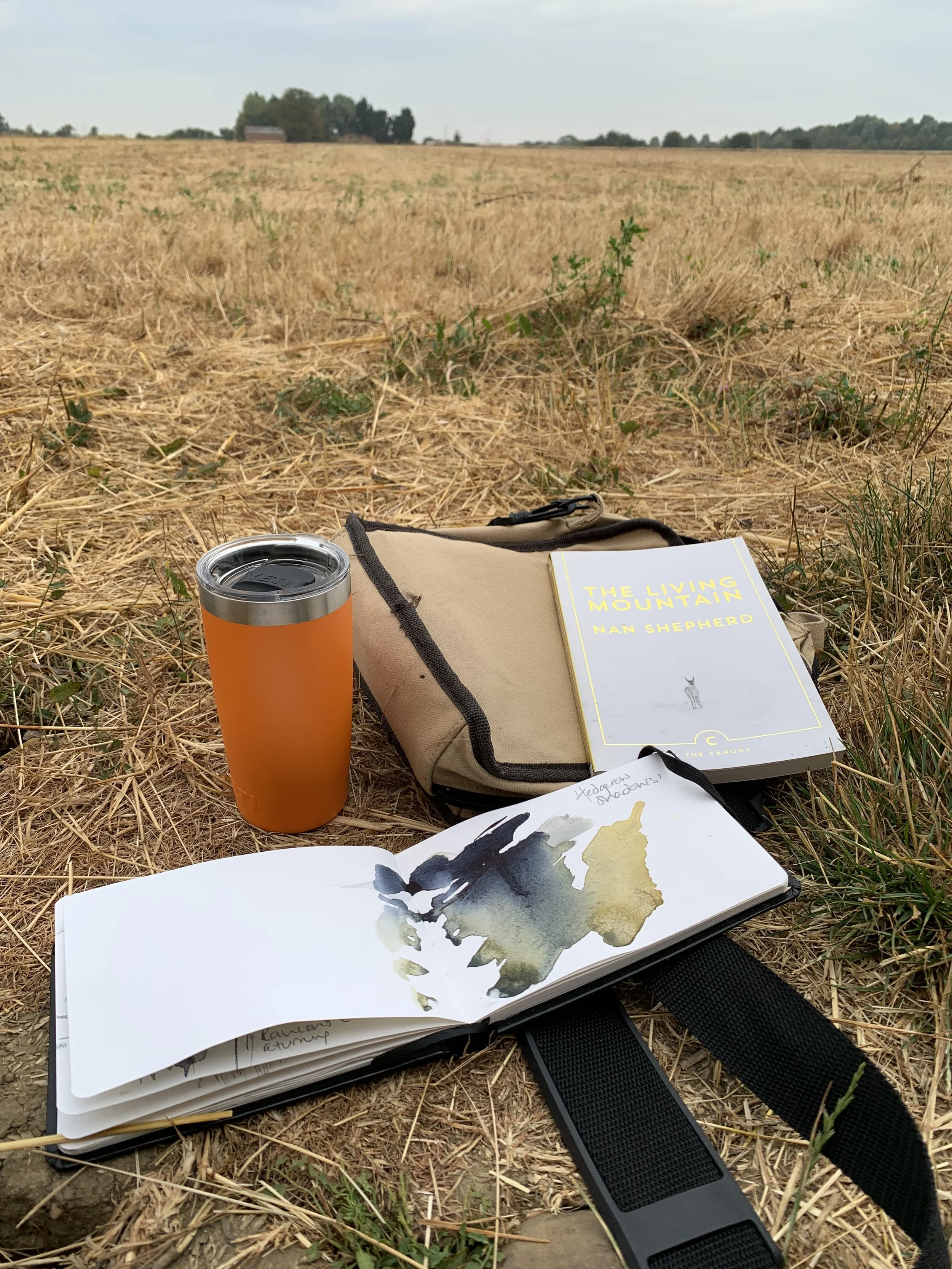
Field Notes: Books That Changed the Way I Notice…
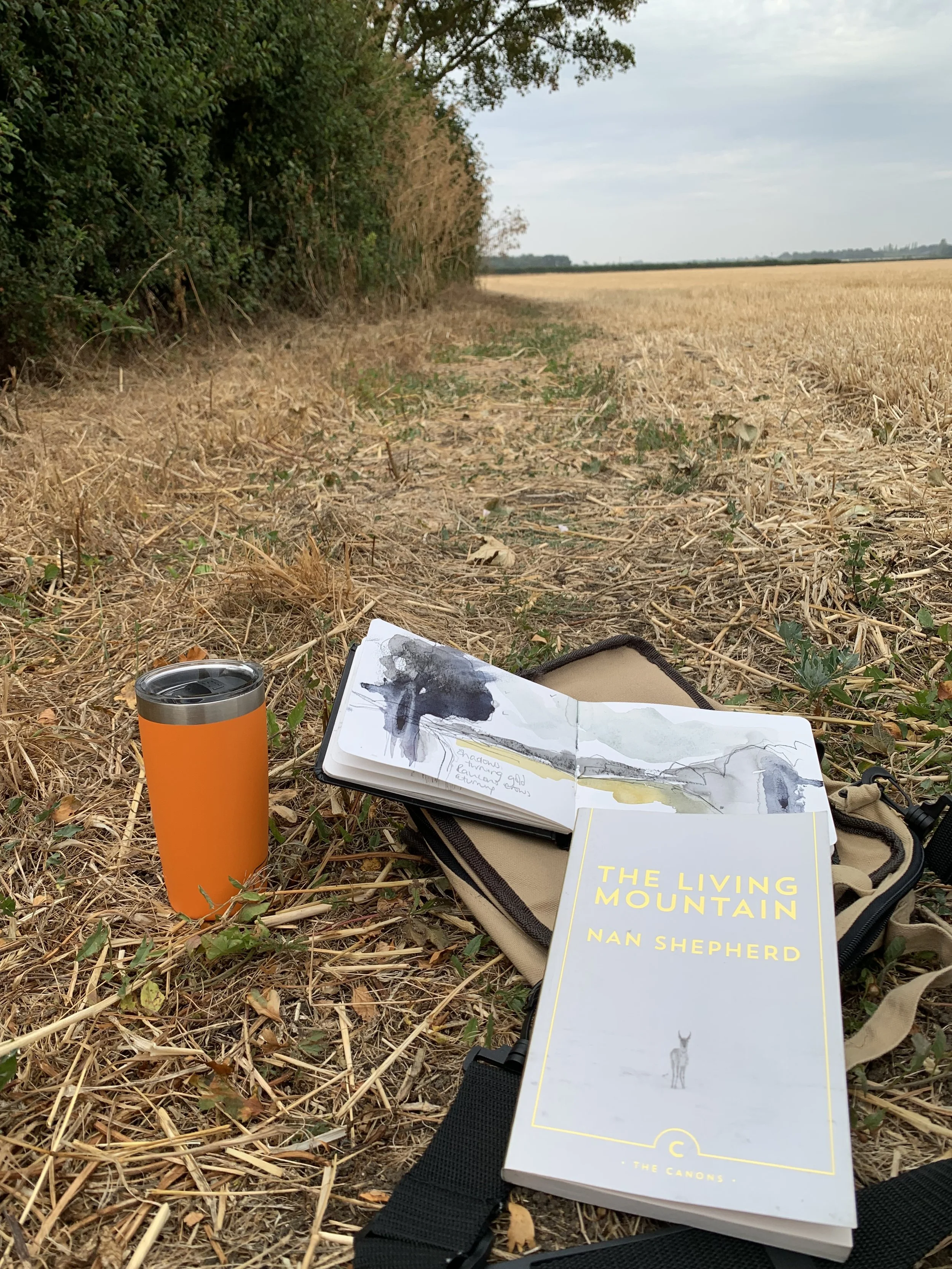
I've found myself returning to The Living Mountain by Nan Shepherd.
It's one of those books that seems to reveal something different every time I open it. Not because the words have changed, but because I have.
As I was reading, a long distant memory floated to the surface…
My mum once told one of my teachers that she couldn't understand why I kept rereading books. "Surely," she said, "once you'd read a book, you knew how it ended."
My teacher smiled and replied that each time we return to a book, we bring a different version of ourselves to the reading.
I've never forgotten that.
Perhaps that's why certain books find their way back onto my bedside table every few years. They're familiar companions, yet they always seem to offer something I hadn't noticed before.
The Living Mountain is one of those books.
Nan Shepherd doesn't simply describe the Cairngorms. She seems to know them from the inside out. She writes with such attentiveness that the landscape becomes far more than a backdrop. She notices the movement of water, the texture of rock, the changing light, the plants underfoot, the weather, the silence.
She writes as someone willing to spend time in a place.
Not passing through.
Not trying to conquer it.
Simply being there.
As I turned each page, I realised that what resonates with me isn't that she's writing about mountains.
It's the way she notices.
Living here in the Lincolnshire landscape, I don't have towering peaks outside my door. Instead, there are broad skies, hedgerows, stubble fields, quiet lanes and the subtle changes that come with the turning of the seasons.
Yet the practice feels exactly the same.
The slower I walk, the more the landscape begins to unfold.
A feather caught on a strand of wire.
A tiny fern growing from a crack in old brickwork.
The shimmer of thistledown drifting across a harvested field.
The faint scent of the parched earth
The sound of wind travelling across the landscape.
None of these things asks to be noticed.
They simply wait.
Nan Shepherd understood this deeply. In The Living Mountain, she writes not only about seeing the landscape, but about experiencing it through every sense — the textures, surfaces and sensations that connect us to a place.
She writes:
“The hands have an infinity of pleasure in them. The feel of things, textures, surfaces…”
I love this idea that a landscape is not just something we look at. It is something we encounter. The roughness of bark, the softness of feathers, the movement of wind, the changing temperature of the air — all these small experiences become part of our memory of a place.
Perhaps this is why certain landscapes stay with us.
Not because we have captured them perfectly, but because we have been present enough to receive them.
The more I thought about my teacher's words, the more I realised they don't only apply to books.
The same is true of a landscape.
I can walk the same footpath dozens of times, and yet each walk is different. The light has shifted. The season has changed. The birds have moved on. Sometimes it's the landscape that's different; sometimes it's me.
And perhaps that's why I keep returning.
Returning to familiar paths.
Returning to my sketchbooks.
Returning to favourite places.
Returning to books that have quietly shaped the way I see the world.
As an artist, I don't think I'm trying to paint fields or skies in any literal sense.
I'm trying to paint what it feels like to have stood there.
The hush before rain.
The coolness of early morning.
The softness of fading light.
The feeling of having noticed something small that, for a fleeting moment, seemed to hold the whole landscape together.
Reading The Living Mountain has reminded me that noticing isn't about seeing more.
It's about seeing more deeply.
Perhaps that's what these Things I've Noticed are becoming.
A way of returning.
To places.
To books.
To memories.
To the quiet practice of paying attention.
"I think perhaps this is why I fill sketchbooks with fragments. Not because every observation becomes a painting, but because some things are worth keeping simply because they were noticed."
Things I've noticed this week
• Swallows gathering on the wires before dusk.
• Seed heads catching the evening light like tiny lanterns.
• Cobwebs glistening between grasses.
• Cabbage white butterflies dancing among thistledown.
• A breeze carrying the scent of blackberries long before I reached the hedge.
Perhaps there's something waiting to be noticed on your next walk.
For me, these small observations often find their way back to the studio — into sketchbooks, into fragments of colour and mark, and sometimes into paintings.
"The more I pay attention, the less ordinary the world becomes.